
Separation anxiety when starting childcare: what helps
By Diego Cohen, Managing Editor · Updated 2026-11-08
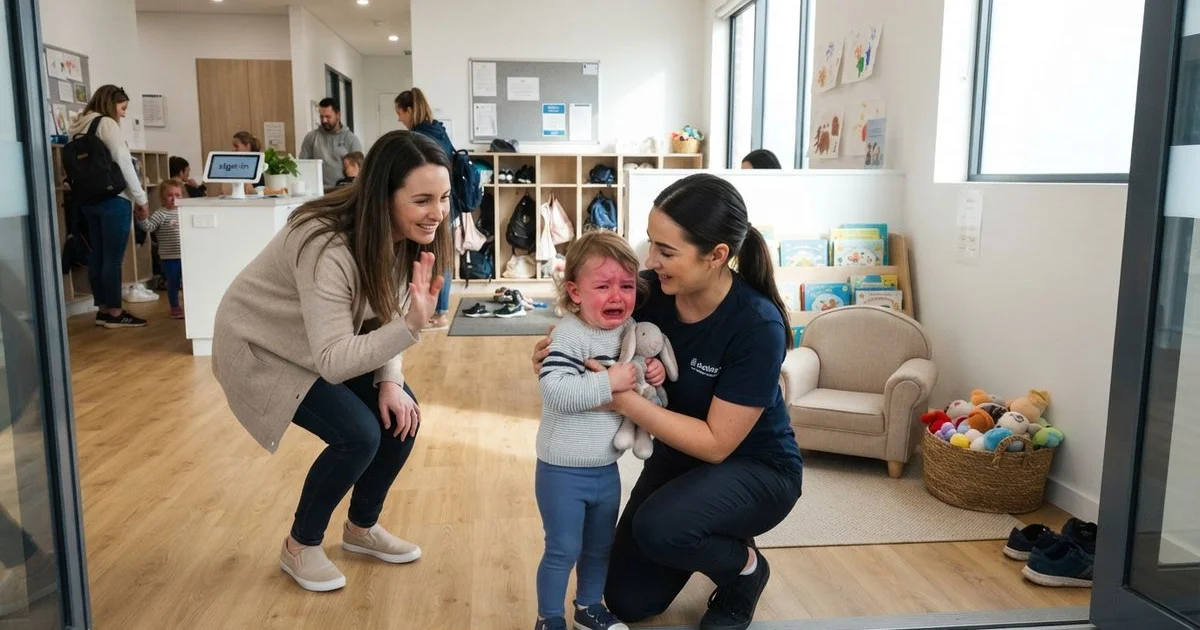
Tears at drop-off are one of the most common reasons parents doubt a childcare choice. They are also hard to read, because a child can cry at the door and be playing soon after you leave.
Separation anxiety is a child’s upset at being apart from a parent, and it is a normal part of growing up for young children (healthdirect). 5 habits help at drop-off: a plain goodbye, a named educator to hand over to, the same routine each day, a time you will be back, and a plan for when the service phones you. See a doctor if the distress is not getting better with time, is getting worse or is interfering with daily life.
Why does separation anxiety show up at childcare drop-off?
Separation anxiety shows up at childcare because starting care brings new people, a change in routine and being away from home, which healthdirect says children often feel anxious about. healthdirect lists clinging, crying, tantrums, headaches and tummy pain as signs a child may show when separating from a parent or carer. It says most children grow out of separation anxiety by learning that their loved ones return and they are safe while apart.
A tearful drop-off on its own tells you little about whether the service suits your child. Children cry at the door of excellent services too.
What helps with separation anxiety at drop-off?
5 habits help with separation anxiety at drop-off, and they are practical suggestions rather than clinical advice:
- Tell your child plainly where you are going and when you will be back, using a landmark in their day such as “after afternoon tea”.
- Say goodbye once, then leave. Coming back for an extra cuddle makes the goodbye longer for both of you.
- Hand your child to a named educator rather than leaving them at the door.
- Keep the order the same each morning, for example bag away, wave at the window, goodbye.
- Tell your child you are going rather than slipping out, so they know what to expect.
We suggest skipping bribes and big promises about later, which add weight to a goodbye that works best when it is short. For the practical side of the day itself, see First day of long day care: what to expect and pack.
What should you ask the service about separation anxiety?
A service can only tell you how it handles separation anxiety if you ask. Our directory records services, ages, opening hours and, for some listings, fees. None of the 10 listings that carry website details mentions how the service settles a new child (website details collected 9 August 2026), so the answer has to come from the director or room leader. Ask these 4 questions:
- Who will meet my child at the door, and will it be the same educator each day?
- What do you do in the first few minutes if my child is upset?
- When will you phone me, and what will you tell me?
- If drop-offs are still hard after the first few weeks, what is the plan?
A useful answer names a specific action. “Children settle eventually” is a reassurance, not a plan.
How do you tell normal separation anxiety from a problem?
3 patterns help you sort a hard drop-off from one that needs action. The table shows each pattern and what to do next.
| What you see | What it may mean | What to do |
|---|---|---|
| Cries at the goodbye, then plays once you have gone | Normal upset at separating | Keep the routine the same |
| Goodbyes get a little shorter and calmer as the weeks go on | Settling is working | Keep the routine and tell the educators what you notice |
| Distress for most of the day, getting worse, or getting in the way of daily life | The approach may need to change | Ask the room leader for a meeting and a written settling plan, and see your doctor |
healthdirect advises seeing a doctor if separation anxiety is not going away or getting better with time, is getting worse, or is interfering with daily life and friendships (healthdirect). Among the signs a doctor considers when diagnosing separation anxiety disorder, healthdirect lists symptoms that persist for at least 4 weeks in children. Only a doctor can make that diagnosis, and a tearful drop-off alone is not one.
Can separation anxiety come back later?
Separation anxiety can come back when something changes, because healthdirect lists a change in routine and new people among the things that make children anxious. 4 changes fit that description: a holiday, an illness that kept your child home, a new educator and a move to the next room. Treat it as you did at the start, with short consistent goodbyes and a check-in with the educators about what they see during the day.
If your child is a baby, Settling a baby into nursery care: feeds, sleep, routine covers feeds, sleep and the questions to ask the babies room.
Who can you talk to about your child’s separation anxiety?
If you are worried about your child’s separation anxiety, healthdirect says to talk to your doctor, a paediatrician or your child’s school counsellor. For advice and to get connected to local mental health services, it also lists Medicare Mental Health on 1800 595 212 (healthdirect). Start with the room leader as well, because the educators see your child through the day.
Parents settle too. Plan something for after drop-off so you are not watching the clock outside the gate, and ask the educators what update you will get during the day. Look for a pattern across several days rather than judging a single bad morning.
Frequently asked questions
- Is it normal for my child to cry at every childcare drop-off?
- Yes, it is common. healthdirect says it is normal for young children to be upset when away from their parents or carers, and that most grow out of separation anxiety. See a doctor if the distress is not getting better with time, is getting worse or is interfering with daily life. Ask the room leader what the service does at the door and when it will phone you.
- Should I sneak out to avoid a scene?
- We suggest not. Tell your child you are leaving and when you will be back, say goodbye once, and go. A goodbye that follows the same order each morning is easier for a child to predict than a sudden disappearance. The first few minutes may be harder, which is why a named educator to hand over to makes a difference.
- Does separation anxiety mean the childcare service is the wrong fit?
- Not on its own. A tearful drop-off tells you little about fit, because separation anxiety is a normal part of growing up for young children. Look at 3 things: whether the educators can describe a specific settling plan, whether they update you during the day, and whether your child's distress is easing. If educators cannot name any strategy, raise it with the director.
- Who can I talk to if I am worried about my child's separation anxiety?
- healthdirect names 3 people: your doctor, a paediatrician or your child's school counsellor. It advises seeing a doctor if the anxiety is not going away, is getting worse or is interfering with daily life. Start with the room leader at the service too, who sees your child through the day. Our directory cannot assess your child, and the listings do not record how each service settles a child.